(NEW YORK) — New York City’s death toll from the coronavirus may be thousands of fatalities worse than the tally kept by the city and state, according to an analysis released Monday by the U.S. Centers for Disease Control and Prevention.
Between March 11 and May 2, about 24,000 more people died in the city than researchers would ordinarily expect during that time period, the report said.
That’s about 5,300 more deaths than were blamed on the coronavirus in official tallies during those weeks.
Some of those excess fatalities could be COVID-19 deaths that went uncounted because a person died at home, or without medical providers realizing they were infected, the researchers at New York City Department of Health and Mental Hygiene said.
It might also represent a ripple effect of the health crisis, they wrote. Public fear over contracting the virus and the enormous strain on hospitals might have led to delays in people seeking or receiving lifesaving care for unrelated conditions like heart disease or diabetes.
“Tracking excess mortality is important to understanding the contribution to the death rate from both COVID-19 disease and the lack of availability of care for non-COVID conditions,” the report said.
The report underscored the challenges authorities face in quantifying the human toll of the crisis. Deaths caused by the coronavirus are believed to be undercounted worldwide, due in large part to limits in testing and the different ways countries count the dead.
Through Sunday, New York City had recorded nearly 14,800 deaths confirmed by a lab test and another nearly 5,200 probable deaths where no test was available but doctors are sure enough to list the virus on the death certificate.
In its analysis, the report released Monday said the 5,293 excess deaths were on top of both confirmed and probable fatalities.
(LONDON) — The World Health Organization said Friday that although a market in the Chinese city of Wuhan selling live animals likely played a significant role in the emergence of the new coronavirus, it does not recommend that such markets be shut down globally.
In a press briefing, WHO food safety and animal diseases expert Peter Ben Embarek said live animal markets are critical to providing food and livelihoods for millions of people globally and that authorities should focus on improving them rather than outlawing them — even though they can sometimes spark epidemics in humans.
“Food safety in these environments is rather difficult and therefore it’s not surprising that sometimes we also have these events happening within markets,” Ben Embarek said.
He said reducing the risk of disease transmission from animals to humans in these often overcrowded markets could be addressed in many cases by improving hygiene and food safety standards, including separating live animals from humans. He added that it is still unclear whether the market in Wuhan linked to the first several dozens of coronavirus cases in China was the actual source of the virus or merely played a role in spreading the disease further.
Ben Embarek said investigations are continuing in China to pinpoint the animal source from which COVID-19 jumped into humans but that studies have since found other species are susceptible to the disease, including cats, tigers, ferrets and dogs. Identifying other vulnerable species will allow certain interventions to be put in place to prevent future outbreaks. “We don’t want to create a new reservoir in animals that could continue to create infections in humans,” he said.
Ben Embarek said it might take considerable time to identify the original animal source for the new coronavirus, explaining that extensive studies need to occur first, involving health officials carefully interviewing many of those infected in the early stages of the outbreak, to narrow down what their interactions with animals were before they fell sick. Scientists would then need to take samples from animals to find a close match to the coronavirus circulating in humans.
To date, China has not invited WHO or other external experts to be part of that investigation. Ben Embarek said China likely has the necessary expertise to conduct such studies and WHO has not noted any problems in China’s willingness to collaborate with others.
Driving around her Kearney, Missouri neighborhood is both respite and torture for Kathie Hodgson. She likes seeing other people out and about; it reminds her what life was like before COVID-19. But Hodgson, a 41-year-old teacher who lives alone after a recent divorce, says seeing happy families playing in their yards or walking their dogs can also send her plunging deep into a spiral of loneliness.
“You know, as much as I have valued my independence in the past year, it’s finally hitting me that I would like to curl up on the couch with somebody at night,” Hodgson says.
The irony, Hodgson says, is she was thrilled to live alone before the coronavirus pandemic hit, enjoying her “me time” and the newfound ability to date and see friends whenever she wanted—not long ago, she lived with her kids (who recently grew up and moved out) and a partner (who she recently divorced). But now that she’s confined to her apartment almost 24 hours a day, she is feeling the emptiness of her home acutely.
“Some days I smile and feel okay,” Hodgson says. “And other days I curl up in a ball and wonder if this goes on too much longer, will I be able to take it mentally? Can I last sanely living alone for months—a year?”
Even before the COVID-19 pandemic, public-health experts were concerned about an epidemic of loneliness in the U.S. The coronavirus has exacerbated that problem, with most face-to-face socializing for people still under lockdown orders indefinitely limited to members of their own households. For the 35.7 million Americans who live alone, that means no meaningful social contact at all, potentially for months on end.
Experts are rightly concerned about the mental health ramifications of this widespread isolation, especially since there’s no agreed-upon tipping point at which acute loneliness transitions into a chronic problem with long-term consequences. A group of doctors from Boston Children’s Hospital and Harvard Medical School warned in an April 22 commentary published in the Annals of Internal Medicine that physical distancing and stress caused by the pandemic, combined with rising firearm sales, could worsen the suicide crisis the U.S. has already been weathering for more than a decade.
On the other hand, some mental health advocates are optimistic that COVID-19 will finally give loneliness the mainstream recognition it deserves—possibly paving the way for a more socially connected future.
For such a common experience, loneliness is surprisingly slippery to define clinically. Loneliness is not included in the DSM-5, the official diagnostic manual for mental health disorders, but it goes hand-in-hand with many conditions that are. It’s often lumped together with social isolation, but the two concepts are different. Social isolation is an objective indicator of how much contact somebody has with other people, whereas loneliness is “the subjective feeling of isolation,” says Dr. Carla Perissinotto, a geriatrician at the University of California, San Francisco who studies loneliness. Being alone doesn’t necessarily mean you’re lonely, nor does being around people mean you’re not, Perissonotto says. Loneliness is a feeling only the person experiencing it can truly identify.
It can also be difficult to untangle whether loneliness is a symptom or a cause of a larger health issue: does someone withdraw socially because they’re depressed, or do they become depressed because they’re lonely? In any case, studies show chronic loneliness has clear links to an array of health problems, including dementia, depression, anxiety, self-harm, heart conditions and substance abuse. People without social support also have lower chances of full recovery after a serious illness than people with a strong network, studies show. The health consequences of loneliness are often likened to the effects of smoking 15 cigarettes a day—and far more common. While the most recent data show just 14% of American adults and about 5% of high school teenagers smoke cigarettes, a January report from health-insurer Cigna suggested around 60% of American adults felt some degree of loneliness, even before the COVID-19 pandemic hit.
Since lockdowns and stay-at-home orders were instated, roughly a third of American adults report feeling lonelier than usual, according to an April survey by social-advice company SocialPro. Another survey, also in April, for financial research group ValuePenguin, put the number even higher, at 47%. If the stereotype of a lonely person is a frail, elderly adult who lives alone, the coronavirus pandemic has exposed the truth that was there all along: anyone, anywhere, of any age can experience loneliness.
SocialPro’s survey of 1,228 people ages 18 to 75 predominantly living in English-speaking countries found that at least 20% of respondents from each age group polled were lonelier than usual as a result of coronavirus. Millennials were among the most likely age groups to feel lonely before COVID-19, research shows, and that’s no different now; 34% of millennials in the survey said they were “always or often” lonelier due to the pandemic.
Gender wasn’t a predictor, either: about 25% of women and 30% of men said they felt coronavirus-related loneliness. Nor does living situation necessarily dictate feeling. Caitrin Gladow, 41, has spent the last two months at home in New Orleans with her husband and three young kids—but she says she’s never felt more alone. She says she has zero emotional energy for self-care, since she’s juggling work, home-schooling and regular parenting while dealing with “paralyzing” stress and anxiety and the grief of losing people in her community to coronavirus. On top of that, she says, there’s the guilt for feeling overwhelmed when so many people are worse off.
“Even in a house full of screaming children who I love more than anything, I find that I feel especially vulnerable,” Gladow says. She feels an unspoken pressure “to be the glue of the family, and I’m trying not to let them down, but in the process I’m crumbling.”
And of course, elderly adults remain at high risk of loneliness. Given their susceptibility to serious COVID-19 infections, older adults are likely to be even more cut off from outside life. NORC at the University of Chicago found the coronavirus pandemic has made about a third of adults 70 and older lonelier than usual.
In other words, loneliness is everywhere, especially now. “This is a huge topic, but it’s been kind of sidelined,” Perissinotto says. “Now everyone is forced to look at this in a different way. We can’t keep ignoring this.”
Technology has emerged as an imperfect solution. Video-chat platforms like Zoom are surging in popularity, and nearly every social media network is billing itself as a way to stay connected with friends virtually. Instagram in March introduced a new feature that lets friends view posts together over video chat, specifically to foster bonding during COVID-19 isolation. Telecom companies like Samsung have donated smart devices to help people in quarantine stay connected.
There are also community groups attempting to make digital communication more meaningful. Some existed before COVID-19 but have expanded to meet surging demand, like Let’s Be Authentic, a Philadelphia-area social group that pairs up members for weekly video chats and communication exercises. It has seen a noticeable uptick in use of its online programs, a company representative says. And in Maryland, the state’s Department of Aging has adapted a program that provided daily automated wellness checks for seniors so that any elderly person who signs up also gets a personalized phone call from a volunteer at least once a week. “They know someone is there for them should they need it, and that alone makes you feel good,” says department secretary Rona Kramer.
Other groups have popped up in direct response to the crisis. A group of Cornell students built the platform Quarantine Buddy to match up users with similar interests for virtual conversations, and has so far attracted at least 600 people in 15 countries, ranging in age from 18 to 80.
But research suggests not everyone benefits equally from digital interactions. Several studieshave found that tools like video chats and instant messages may help elderly adults feel less lonely, especially if they’re physically isolated from others and cannot otherwise socialize. But, interestingly, research shows that loneliness may subside for younger adults when they reduce their social media usage. In regular life, that may be because endless scrolling through other people’s social-media posts makes young people feel left out, or it may be because it’s replacing valuable in-person moments; under COVID-19 lockdown, social media may simply serve as a painful reminder of their loved ones’ physical absence. In ValuePenguin’s recent survey, 10% of respondents said video chats only make them feel lonelier.
Jessica Pflugrath, a 27-year-old freelance writer and editor who lives alone in Brooklyn, New York, has been relying on video chats to stay connected with her friends, but she says they bring a nagging feeling of unease. The ebb and flow of an in-person conversation doesn’t always translate to video, and she doesn’t like the pressure of having to be “on” all the time; she also doesn’t like how easily digital conversations lend themselves to distraction. “There’s a lack of feeling present with people, in general,” she says.
But with few other options available, people should probably make the best of virtual platforms, says Rudolph Tanzi, vice chair of neurology and director of the genetics and aging research unit at Massachusetts General Hospital. Stress related to loneliness can trigger inflammation in the body, he says, which in turn is linked to a host of chronic conditions. In the current context, social interaction is just as important for quelling that stress response as physical behaviors like getting enough sleep, exercising, practicing yoga or meditation, and following a balanced diet, he says.
“We use the term ‘social distancing’ but it’s completely the wrong term,” Tanzi says. “You want ‘physical distancing.’ That doesn’t exclude social interaction via some of these internet platforms.”
How much emotional benefit you get from virtual communication may come down to your mindset, says Jenny Taitz, an assistant clinical professor of psychiatry at the University of California, Los Angeles. “If we write off a friend texting us,” she says,”we’re not going to be able to enjoy or savor the dose of connection that they’re offering us.” Studies have shown that feeling socially supported can make a measurable difference for mental health, regardless of how much socializing you’re actually doing.
Christine-Marie Liwag Dixon, 30, has had years of practice communicating virtually. Most of Dixon’s family are in the Philippines, but she and her husband live in the New York suburbs, so extended family gatherings are rare. “I have more than a dozen cousins, and we’ve never all been in the same room,” she says. For years, Dixon has had to get by on small gestures of love, like a text or a picture of an especially good meal. That can be enough, if you frame it right, she says. “Even little, sporadic reminders like that remind us that no matter how far apart we are, even if we don’t see each other regularly…we still love each other, we’re still connected and we’re still a family.”
But for truly lasting change, the health care system also needs to buy in. A February report from the National Academy of Sciences, Engineering and Medicine concluded that health professionals should be screening seniors for loneliness, and entering warning signs into patients’ medical records just like any other condition. In the wake of COVID-19, that may become best practice for patients of all ages. The report’s authors also called on the government and health insurers to fund research into loneliness’ causes, effects and cures, and pushed for awareness campaigns about the scope of the problem among people of all ages. What can help now? Mindfulness training and cognitive behavioral therapy can be valuable anti-loneliness tools for people young or old, since reframing the way one perceives social support can make an appreciable difference in feelings of loneliness, Taitz says. And these techniques can be easily taught by a mental health professional over telehealth platforms, she adds.
At the very least, COVID-19 is making loneliness easier to talk about, which could encourage people who struggle with it to seek help or reach out to connections they do have, Perissinotto says. There’s a certain amount of stigma attached to any mental illness, but loneliness can be uniquely uncomfortable to talk about. It can feel like a personal failing to admit you don’t have the social network you want, and there’s a tendency for others to blame the victim, Perissinotto says. In one 1992 Personality and Social Psychology Bulletin study, for example, participants rated a fictional lonely person as less likable, social, competent and attractive than a non-lonely person. Experts hope that the fact that loneliness is now mainstream and easier than ever to talk about will finally change that perception.
Claire Lejeune, a 24-year-old photographer who lives in Los Angeles, says she’s not a lonely person by nature; her job, after all, involves being around people, and she’s active and social in her personal life. But when two of her roommates left her apartment to shelter in place elsewhere and the third began keeping mostly to himself, she says she found herself truly lonely for the first time she can remember—and somewhat uncomfortable with that realization.
“I’m privileged and I’m not doing as terribly as some people are in quarantine. I felt kind of bad to even say that I’m lonely because it’s like, ‘Oh, woe is she,’” Lejeune says. But when she decided to tweet about her feelings, she says she was met with a wave of support from people going through the same thing.
“There was definitely a sense of community within the loneliness,” Lejeune says. “Everyone can relate to it.”
In late February, several weeks before the coronavirus outbreak shut down American cities and rose to the level of a national crisis, Kerri Rawson began to feel sick. “I was hit out of nowhere with what feels like the flu at first,” says Rawson, who also has asthma and takes cardiac medication for high-blood pressure. “You’re fine, and then all of a sudden you have a fever below 100°F and chest congestion.”
Rawson is a 41-year-old writer and mother of two in Florida. (You may recognize her name from her 2019 memoir, about growing up as the daughter of a serial killer.) Her fever lasted for 11 days, during which time her children also developed above-normal temperatures. Her son’s fever rose to 102°F but tapered off in a few days; her daughter, however, developed a barking cough that Rawson had never heard before. A doctor diagnosed the 11-year-old with bronchitis.
“That’s when my first conversation about COVID-19 started,” Rawson says. On March 6, still struggling with fever and chest congestion, she asked her family doctor whether she might have contracted the coronavirus. He was skeptical. (There were, at that point, fewer than 10 reported cases in Florida.) “He asked me questions about traveling and contact,” Rawson says. “He said, ‘Our hands are basically tied by the CDC [the U.S. Centers for Disease Control and Prevention]. We can’t test. Call the state health department, call the local one.’” Rawson did so, but was told they were only administering tests to those who had traveled internationally, had contact with someone who had, or were in critical condition, none of which described her.
Over the following week, Rawson’s condition worsened. Her blood pressure rose, her heart rate was up, and she began to have shortness of breath. Rawson saw a family doctor. “I just sort of collapsed on her table,” she says, and told the doctor she was worried it might be COVID-19.
The doctor sent her to the emergency room. “I was basically in hypertensive crisis by the time I got to the ER,” Rawson says. She was admitted to a hospital in Altamonte Springs, FL, and placed in a room on an observation floor with a sign on the door requiring nurses to take precautions like mandatory gloves and surgical masks. Doctors tested her for “everything under the sun,” she says, but not COVID-19.
Kerri RawsonCourtesy of Kerri Rawson
It had now been nearly two weeks since Rawson first noticed any symptoms, and she still had not been tested for the virus—a sadly common tale during the early weeks of the pandemic, when U.S. officials overwhelmingly failed to make widespread testing available to sick Americans. Florida’s pandemic response, in particular, was compromised by meager funding to state and county health agencies and cuts to research funding, according to a Tampa Bay Timesinvestigation, as well as Governor Ron DeSantis’s slowness to issue a stay-at-home order.
On March 12, Rawson received a CT scan. When doctors saw the results, “they freaked out,” she says. She was diagnosed with bilateral pneumonia. Most concerningly, the scan of Rawson’s lungs revealed “ground-glass” opacities—abnormalities in the lungs that show up as grayish patches, resembling ground glass—that are common among COVID-19 patients. “When they saw the ground-glass look in the lobes, they contacted infectious disease, and that’s when everything hit the fan,” Rawson says. “Friday morning, the nurse comes barreling in, tosses all my stuff on my bed. They throw a sheet over me. They put me in the hallway, they wipe down my bed, put a mask on me, and rush me through a couple floors up to the zero-air containment room.”
Finally, on March 13, after being moved to an isolation room on a progressive care floor and prescribed two different antibiotics, Rawson received the nasal and throat swab test for COVID-19. Six hours later, the test came back negative.
Rawson believes it was a false negative, and that the test was not administered correctly. “I ended up having a really bad nosebleed and my swabs were covered in blood,” Rawson says. “[A nurse] in the ER said that could have even affected the test.” (We’ve reached out to the hospital, AdventHealth Altamonte Springs, for comment in response to Rawson’s claims in this article. The hospital has not provided an on-the-record comment.)
Soon she was kicked out of the isolation room and moved back to the observation floor. “They ended up having to evict me at like 1:00 a.m. because they needed it for someone else,” she says. “And the night nurse didn’t really want to be around the COVID [patients]. She wasn’t really having any of it. I had to, like, push my dumb IV pole around and collect all my stuff when I was really sick.” Rawson was told the room was needed for another suspected COVID-19 patient.
On March 14, she went home, where she spent a week battling a difficult recovery from pneumonia, including suffering from neurological issues and sleep deprivation—“it was horrible,” Rawson says. She wound up back in the ER a week later when her fever returned. By mid-April, she still had not fully recovered.
Reason to be skeptical of test results
Rawson’s experience with the virus—assuming this was indeed COVID-19—was extreme, but her testing experience is not uncommon. The nasal swab diagnostic test, which involves amplifying small traces of DNA using a laboratory technique known as polymerase chain reaction, or PCR, is far from infallible. One preprint article from China estimates the false-negative rate to be as high as 30%.
In practice, that figure would mean that “if you tested 100 people who all had COVID-19, 30 of them would still get a negative result,” says Dr. Catherine Carver, a PhD student in Population Health Sciences at the Usher Institute, University of Edinburgh.
This would also mean that thousands of Americans have received test results telling them that they do not have the virus when in fact they do. “This is a significant problem because it could create false reassurance for the people getting the false negative result that they are well and won’t infect other people,” says Carver.
In early April, a Yale physician grew alarmed and wrote a New York Timesop-ed urging patients who have coronavirus symptoms but test negative to assume they are positive. Citing anecdotal evidence from fellow doctors, he noted that such situations are “uncomfortably common.”
So far, there is little reliable research into overall COVID-19 test performance. But it’s dangerous to place too much faith in the test’s verdict, says Dr. Colin West, a physician and professor of medicine at the Mayo Clinic in Rochester, MN. “Testing is still going to be a very important part of managing this pandemic,” West says. “But we need to understand that the tests aren’t perfect. No test is perfect. And if there’s a certain percentage of false negative results that we may expect, we need to be cautious and not celebrate too soon if we get a test result that comes back negative.”
West is the co-author of a recent article inMayo Clinic Proceedings warning against over-reliance on COVID-19 testing. Even if the test is 90% accurate, the paper states, “the magnitude of risk from false test results will be substantial as the number of people tested grows.” (Suppose 5 million people are tested; that could mean 500,000 false results.)
That doesn’t mean testing isn’t a crucial element of the nation’s pandemic response—or that the administration’s failure on this front is anything less of an outrage. On a population level, mass-distributed tests will be essential to mitigating the crisis. It does, however, mean that patients and care providers alike need to resist the temptation to regard test results as gospel.
There are several reasons the test may deliver inaccurate results. The first is that a nasopharyngeal swab is simply not easy to perform. “Doing it properly requires sending the swab fairly deep back into the nasopharynx,” West says. “There has been concern that, in some cases, the swabs are not getting back as deep as they need to go. The nose is being swabbed instead of getting to the back of the throat.”
Another possibility is that—depending on timing—a patient who has the virus may not have it in sufficient quantities for the sample to render a positive test result. “It turns out that the viral load and the performance of the PCR tests actually drops after a number of days of symptoms,” says West. “So if you wait too long, you might get a false negative. But if you do it too early, you might get a false negative as well because there isn’t enough viral material.”
While ramping up public testing has been a priority, experts say there also needs to be more research into test reliability. “Doctors and patients need to know how much faith to have in these tests, so they can make the right decisions about patient care or safely going back to work,” says Dr. Carver, who is the co-author of a recent paper arguing that there is not yet enough data to accurately assess COVID-19 test accuracy.
Emotionally, a negative test result can also cause more stress and uncertainty for suspected coronavirus patients. “It has been absolute hell,” says Eva, a Los Angeles-based music producer who tested negative twice after getting sick in mid-March, and who prefers to keep her last name confidential for privacy reasons. “I’ve had two doctors tell me I probably don’t have COVID, and some say I probably did have it. I’ve been going crazy calling doctor friends and asking for help, thinking I have cancer or a blood clot or something.”
Turned away from the doctor
Meanwhile, Kerri Rawson still doesn’t know for sure if she had COVID-19.
What she does know is that the possible false negative has made it more difficult for her to receive the medical care she needed.
On March 22, Rawson returned to the emergency room with cardiac issues. By then, the outbreak had risen to the level of a national emergency. The hospital now had a more intense protocol for patients displaying symptoms, Rawson says: “If you flagged for possible COVID, they didn’t put you through triage. They basically sent you back to a zero-air room and triaged you there.” (This type of isolation room “had its own air system that wasn’t attached to the greater hospital,” Rawson explains.)
Rawson was tested for the virus a second time. Around then, Rawson says, a nurse told her that the hospital staff had been retrained on how to administer the swabs since her last test. “They told me they had been having a ton of false negatives like two weeks before, when I was in there,” Rawson says. “And now they’re supposed to swab up and hold for three seconds, which they weren’t doing before.”
According to Rawson’s account, the nurse said patients were previously being tested on one floor, receiving a negative result, then being tested on a different floor with a positive result. Rawson also heard that the hospital had instituted a new policy: If someone was tested due to COVID-19 symptoms and the test came back negative, they would be tested again 24 hours later.
Rawson was told to expect the results of her second test in two weeks. It’s been more than a month. She never received them.
That became a problem when her family doctor advised her to follow up with a pulmonologist, given her asthma condition. She tried to make an appointment. “I mentioned I had been in the hospital with what doctors were saying was highly clinically significant for COVID,” Rawson says.
Rawson plans to see if her doctor can order her an antibody test, which is meant to reveal whether the patient has built immunity to the virus. (Such tests may also not be entirely reliable.) She has felt vindicated by reporting from the Palm Beach Post suggesting that COVID-19 may have infected hundreds of Florida residents as early as January or February, long before the state acknowledged its first presumed cases. Meanwhile, the state’s attempts to control the outbreak have been stymied by a massive testing backlog, which could include Rawson’s second test.
By late April, Rawson had mostly recovered, but still felt some fatigue. Her lungs remained weak. She could barely make it up a flight of stairs without stopping to catch her breath. She has no idea if she will ever receive the results of her second swab.
“I’m assuming they sent it off,” she says. “I have no record that they sent it off.”
A World Health Organization scientist said Covid-19 comes from bats and can infect cats and ferrets, but more research is needed into the suspected animal link to the disease.
The novel coronavirus comes from a group of viruses that originate or spread in bats, and it’s still unclear what animal may have transmitted the disease to humans, Peter Ben Embarek, a WHO expert in animal diseases that jump to humans, said Friday in a briefing with reporters.
The virus probably arrived in humans through contact with animals raised for food supply, though scientists have yet to determine which species, he said. Studies have shown that cats and ferrets are susceptible to Covid-19, and dogs to a lesser extent, he said, adding that it’s important to find out which animals can get it to avoid creating a “reservoir” in another species.
Questions about the origin of Sars-CoV2, the virus that has caused the pandemic, have burned hotter since U.S. President Donald Trump suggested that it came from a lab in China. Scientists who have studied the issue maintain that the virus originated in an animal, and probably entered the human population in November.
The first human cases were detected in and around Wuhan, and most people had contact with the animal market, though not all, Ben Embarek said. The WHO intended to spend more time investigating the virus’s animal origin on an earlier mission to China, Ben Embarek has said. The lockdown of Wuhan, the region in central China where the pandemic originated, made that impractical, he said.
Trump has doubled down on claims that the Chinese mistakenly released the virus from the laboratory as the outbreak in the U.S. has grown to become the world’s largest and deadliest. Chinese officials have said that the U.S. has no evidence to back up those claims and called the allegations a blame game.
Just a few miles from Disney World near Orlando, Fla., Harris Rosen’s hotel empire is mostly closed because of the COVID-19 pandemic. One crucial condition for reopening, Rosen says, will be testing any of his company’s 4,000 employees who show potential signs of having the disease.
Since March, Rosen Hotels & Resorts, which comprises eight hotels with nearly 7,000 rooms, has tested more than 500 such workers at its employee health clinic and its impromptu drive-thru testing site near Orlando. Sixteen were confirmed cases of COVID-19. When the hotel chain reopens later this spring or summer, it plans to have employees regularly fill out a questionnaire about their health and travel history. All employees will get their temperature taken when they arrive and those with fevers above 99°F will not be allowed on the worksite. Rosen is still working out details of its strategy, but it also plans to give workers with a fever and other COVID-19 symptoms a diagnostic test for the virus.
Across the U.S., and across industries, companies have closed their worksites for the past month or so, or operated at significantly reduced capacity. Meat-processing plants in the Midwest have been closed because tight workspaces helped spur outbreaks, nursing homes across the country have seen deaths among staff members needed to care for ailing residents, and flight attendants report increasing cases of the disease.
Now, as half of the states begin the delicate task of lifting stay-at-home orders and allowing businesses to reopen, Rosen is one of many employers being thrust into the debate about how to keep employees and customers safe.
Some employers say testing and screening can help reduce disease transmissions and workers’ fears. COVID-19 testing has vexed health officials and politicians since March. Federal and state leaders have bickered over whether supply of tests are adequate. Rosen Hotels & Resorts, however, says it does not anticipate any problems securing test kits. A big reason why it’s quickly been able to start testing is because Rosen has been providing health services to its workers for nearly 30 years though a large worksite clinic.
While there are still parts of the country with a paucity of testing, central Florida is not one of them. The Orlando area has at least two dozen testing sites and Florida Governor Ron DeSantis said during a meeting at the White House this week with President Donald Trump, “Our ability to test exceeds the current demand.”
Amid much uncertainty, many companies say they are working to devise their testing strategies. For example, Pittsburgh-based U.S. Steel Corp. is still trying to decide whether to start testing its roughly 18,000 employees at locations in multiple states across the country. “It’s a difficult time for employers trying their best to protect employees,” says Dr. Mohannad Kusti, the company’s corporate medical director. Kusti says testing isn’t perfect—the company has hesitated to start testing partly due to lack of tests and concerns over accuracy, he says—but could add to the arsenal of weapons against the virus. That includes requiring workers to wear gloves and face masks and increasing social distancing when applicable.
Employers with on-site health clinics, like Rosen and U.S. Steel, are best positioned to test because they likely have access to the supplies and the providers needed to administer them, says Mike Thompson, CEO of the National Alliance of Healthcare Purchaser Coalitions. For example, earlier this year Microsoft began a testing program for workers at its Redmond, Wash., headquarters. Silicon Valley-based Intel Corp. says it is looking into the issue but has not decided how to proceed. Amazon, based in Seattle, Wash., says it is setting up a system of labs to begin testing its workers across the country.
“Regular testing on a global scale, across all industries, would both help keep people safe and help get the economy back up and running,” Amazon CEO Jeff Bezos wrote in a recent shareholder letter.
Employers are generally not allowed to inquire about workers’ medical conditions. But the Equal Employment Opportunity Commission, the federal agency that enforces workplace civil rights laws, issued new rules in April permitting employers to test for COVID-19 as a condition of entering the workplace. The one caveat is that employers must either test all employees, or, if only certain employees are selected for testing, the employer must have a reasonable reason for doing so—such as testing employees who exhibit persistent coughs or other symptoms associated with the disease.
About one-third of employers surveyed in April by the San Francisco-based non-profit Pacific Business Group on Health said they are testing employees at or near the workplace or considering it.
Some experts, however, question whether such efforts will make a difference.
Dr. Jamal Hakim, chief operating officer at Orlando Health, a network of hospitals in the Florida city, says a more effective strategy would be making sure that employees stay home if they have any COVID-19 symptoms, and that those employees without symptoms wash their hands often and don’t touch their face when at work or out in public. “Those behavior modifications will dwarf testing in terms of importance going forward,” Hakim says.
One challenge with testing is someone newly infected may not show a positive result on a test for several days. People can obviously also get infected following a test. It also takes at least a day to get results back, giving the virus 24 hours to spread unchecked.
Despite the drawbacks of testing, many major employers are moving forward in an effort to keep workers safe. St. Louis-based Watlow, a global manufacturer of thermal products with 1,600 U.S. employees, this month began testing workers who believe they may have been exposed to people with COVID-19 as well as workers who are travelling to its Mexico plant to see if they currently have the virus or previously had it and now have antibodies for the disease. In addition, the temperatures of all employees are taken when they arrive for work and anyone above 99.2°F is sent home. Employees wear masks on the job and barriers were installed between some work stations to promote social distancing.
As of May 6, Waslow has tested fewer than a dozen people at its onsite health clinic, says Sheryl Hicks, vice president of human resources. The company is weighing whether it can or should test everyone.
“We are learning as we go,” Hicks said. “There is a cost to these things, but if it gives us more information to keep people safe or provide a safer environment for folks then that is not necessarily a bad thing.”
Kaiser Health News(KHN) is a nonprofit news service covering health issues. It is an editorially independent program of the Kaiser Family Foundation that is not affiliated with Kaiser Permanente.
(WASHINGTON) — The Defense Department has begun barring the enlistment of would-be military recruits who have been hospitalized for the coronavirus. Under a Pentagon memo signed Wednesday, applicants who have tested positive for the virus but did not require hospitalization will be allowed to enlist, as long as all health and other requirements are met.
Those recruits who tested positive won’t be allowed to begin the enlistment process until 28 days after the diagnosis, and they’ll be required to submit all medical documentation. They’ll be cleared for military service 28 days after they’re finished with home isolation, and they won’t need a waiver.
The Associated Press obtained a copy of the guidelines, which say that people who were hospitalized may have longer-term physical limitations. Those people would be considered “permanently disqualified,” but could then be allowed to request a waiver from the military service they want to enter.
The military services could then require additional medical testing or evaluation as part of that waiver process to determine if the applicant should get a waiver and be allowed to enlist. The new requirement adds COVID-19 hospitalization to a long list of medical conditions — such as asthma — that require waivers.
It is unclear how many potential recruits could be affected by the new guidelines.
Some patients hospitalized with the virus have suffered lung damage. Long-term lung damage could hinder recruits from passing grueling physical requirements for military services.
“Residual and long-term health effects for individuals with severe outcomes, such as hospitalization or admission to an intensive care unit from COVID-19 are unknown,” the memo said.
For most people, the new coronavirus causes mild or moderate symptoms, such as fever and cough that clear up in two to three weeks. For some, especially older adults and people with existing health problems, it can cause more severe illness, including pneumonia, or death.
Late last month, as the full weight of the COVID-19 crises was settling on the country’s shoulders, more than one in four American adults met the criteria that psychologists use to diagnose serious mental distress and illness. That represents a roughly 700% increase from pre-pandemic data collected in 2018.
While this surge in mental distress showed up across age and demographic groups, young adults and those with children experienced the most pronounced spikes. Among adults living at home with kids under the age of 18, the rate of severe distress rose from just 3% in 2018 to 37% last month.
These figures are among the grave—though not altogether surprising—findings of a new study from researchers at San Diego State University and Florida State University. The study is currently in preprint, which means it has not yet undergone peer review and formal publication. While preliminary, its data are among the first to offer details on the scope of the country’s coronavirus-related psychological struggles.
Last month, roughly 70% of Americans experienced moderate-to-severe mental distress—triple the rate seen in 2018. “I expected there to be an increase, but even I was surprised by how large it was,” says Jean Twenge, coauthor of the study and a professor of psychology at San Diego State University.
Twenge’s study used data collected in 2018 as part of the National Health Interview Survey (NHIS), an annual survey of tens of thousands of Americans that is overseen by a branch of the U.S. Centers for Disease Control and Prevention. The NHIS included a research-validated, six-item scale designed to measure mental illness. Last month, Twenge and her colleagues used the same six-item scale to assess the mental health of more than 2,000 Americans spread across the country. They compared their figures to the 2018 data in order to produce their findings.
Twenge says the severity of the mental health discrepancies her study revealed probably shouldn’t have come as a shock. “In some ways, this is a perfect storm for mental health issues,” she says. “We’re dealing with social isolation, anxiety around health, and economic problems. All of these are situations linked to mental health challenges, and these are hitting many of us all at once.”
Researchers unaffiliated with Twenge’s study say that, on top of the loss of jobs and the obvious health risks associated with COVID-19, the element of uncertainty is causing Americans a great deal of psychological distress. “People don’t know when we’re going to get back to normal life, and that is quite anxiety provoking,” says Dr. Gary Small, a professor of psychiatry and behavioral sciences at the University of California, Los Angeles.
The COVID-19 crisis has forced U.S. politicians and public health officials into a lose-lose dilemma: both groups are now weighing the life-and-death risk of exposing people to the virus against the manifold hardships created by stay-at-home directives and business closures. More and more, members of each group have discussed the psychological repercussions associated with each scenario—including the specter of rising depression and suicide rates. This new study appears to substantiate those concerns.
While some might point to the psychological blowback as a reason to reopen the economy and lift restrictions, Twenge says that course of action is also fraught. “Opening up too soon and then having to shut back down could also have very negative consequences from a mental health perspective, such as a further increase in mental distress,” she says.
“If there’s a policy message here,” she adds, “it’s that people are suffering and we need to put resources into mental health treatment.
England’s Black, Asian and Ethnic Minority groups are two to three times more likely to die from COVID-19 compared to the general population, a new University College London (UCL) analysis of data from the National Health Service has found.
“Rather than being an equalizer, this work shows that mortality with COVID-19 is disproportionately higher in Black, Asian and Minority Ethnic groups,” said co-author Dr. Delan Devakumar. “It is essential to tackle the underlying social and economic risk factors and barriers to healthcare that lead to these unjust deaths.”
The analysis,published by Wellcome Open Research, used NHS data of the 16,272 patients who died in hospitals in England and tested positive for COVID-19 between March 1 and April 21. The data revealed that the risk of death is 3.24 times higher for Black Africans, 2.41 times higher for Bangladeshis, 2.21 times higher for Black Caribbeans and 1.7 times higher for Indians compared to the general population. The ethnic group with the largest total number of deaths was Indian, with 492 deaths out of 16,272 patients. (Indians are the largest single ethnic minority group in Britain.)
The study’s lead author, Dr. Rob Aldridge, noted that “regional differences in where they live may explain some, but not all, of the differences between ethnic groups,” and that even after taking age and geographical region into account, “there remained large differences in the risk of death between ethnic groups.”
Keep up to date with our daily coronavirus newsletter by clickinghere.
Indeed, after taking region and age into account, the analysis suggested white British people faced a risk of death that is 12% lower than that of the general population and, for White Irish, half lower.
Even in countries with lower death rates, researchers have similarly found that BAME groups face a higher fatality rate than the rest of the population. Experts say that barriers to accessing healthcare as well as underlying social and economic risk factors are to blame. Marginalized communities that already struggle to access healthcare and may live in poor conditions are more likely to have preexisting conditions such as diabetes and heart diseases, making them more susceptible to COVID-19.
Aldridge said UCL’s findings supported “an urgent need to take action” to reduce the risks COVID-19 poses to black and minority ethnic citizens. “Actions to reduce these inequities include ensuring an adequate income for everyone so that low paid and zero-hours contract workers can afford to follow social distancing recommendations, reducing occupational risks such as ensuring adequate PPE, reducing barriers to accessing healthcare and providing culturally and linguistically appropriate public health communications.”
Please send any tips, leads, and stories tovirus@time.com.
Raven Sterrett, a 27-year-old dental hygienist in Portland, Oregon, hasn’t gone to work in months. Governor Kate Brown suspended non-urgent medical procedures in mid-March, part of an effort to stem the spread of the novel coronavirus. But Brown reversed that order on May 1, and now Sterrett’s boss asked her to return to work on May 11.
Sterrett’s employer Pham Dental Care had taken steps to follow the U.S. Centers for Disease Control and Prevention (CDC) guidelines to protect patients and staff, she tells TIME: ordering thermometers to test patients on arrival and acquiring personal protective equipment (PPE) for the staff. Still, she’s unsure if it’s safe to return — for herself, or her patients. Portland, after all, is a hotspot for COVID-19 cases in Oregon, according to a tracker from Johns Hopkins University.
The CDC says that certain dental tools can generate aerosols — tiny droplets that suspend in the air — from a patient’s mouth.Studies suggestCOVID-19 can survive in aerosols for hours, although there’s insufficient data to asses the risk of coronavirus transmission during dental procedures.
Sterrett asked her employers to delay elective procedures until June 15. But the office was “unwilling to compromise,” she says, and told her that if she didn’t return on May 11, her job would “no longer be available.” Pham Dental Caredid not respond to TIME’s request for comment.
Despite calls to “reopen America” and resume some normal economic activity, coronavirus is still spreading widely across the U.S.. But some governors are reopening regardless of the public health risk, putting many workers in the same position as Sterrett. As of May 6,at least 23 statesare partially re-opening their economies, despite warnings from public health experts that the U.S. lacks the testing and contract tracing capability to support such measures.
For workers like Sterrett, whether or not to go back to work can feel like an impossible decision. Should you refuse to return and be fired? Should you quit and risk losing unemployment benefits? In an unprecedented pandemic, what legal protections exist for workers?
That calculus will be different for workers in different states, experts say. “One of the challenges with understanding your rights as an employee is that each state has different rules and laws that can augment federal law,” Ann-Marie Ahern, a labor and employment lawyer in Cleveland, Ohio, tells TIME via email. “For instance, workers in California enjoy far more protection in the workplace than almost anywhere else in the U.S.”
Many states and cities have also expanded their usual worker protection laws during the pandemic. Michigan Gov. Gretchen Whitmer, for instance, issuedan executive orderin early Aprilprohibiting companies from firing people who stay home for certain coronavirus related reasons. And the Texas Workforce Commission has issued guidance saying that Texans can receive unemployment benefits if they choose to not return to work for certain COVID-19-related reasons.
But as Ahern notes, underlying federal laws also offer some protections to American workers who feel unsafe returning to work amid the pandemic. Here’s what to know about those rights.
Can my employer fire me if I don’t return to the office?
Generally speaking, an employer can fire you if you refuse to come back to work.Most workers in the United States are employed “at will,” meaning that an employer can fire them for any reason that is not deemed illegal, explains James Brudney, a professor of labor and employment law at Fordham University School of Law in New York.
Being nervous about the coronavirus likely won’t be enough to legally protect you if you refuse to come back to work. Unless you have legal justification (or employer authorization), refusing to work will “constitute a resignation from employment,” says Sean Crotty, a labor and employment lawyer in Detroit.
Several federal laws may provide workers with that legal justification:
The Occupational Safety and Health Act (OSH Act)
The Occupational Safety and Health Act (OSH Act) grants workers the right to refuse to work if they believe workplace conditions could cause them serious imminent harm, Crotty says.
Employers must comply with the OSH Act’s General Duty Clause, which requires employers to guarantee their employees a workplace “free from recognized hazards that are causing or are likely to cause death or serious physical harm.” (States can also have their ownOSH Act-approved workplace safety plans, which might have higher standards.)
But it may be tough to make a coronavirus-related case via the OSH Act.
“I would caution that[the General Duty Clause] is a very high standard,” Crotty says. “It will be particularly hard to meet if the employer is practicing social distancing and hygiene guidelines at the workplace.” Just saying that your employer isn’t doing enough likely won’t be enough to grant you protection, he adds.
If you think your workplace is unsafe because of the coronavirus, and you have concrete, specific examples, you can file a complaint with the Occupational Safety and Health Administration (OSHA). The OSH Act also includes an anti-retaliatory clause, meaning you can’t be fired or demoted for asserting your right to a safe workplace — though a worker must file that claim within 30 days of any alleged retaliation, Bill Hommel, a labor and employment lawyer in Tyler, Texas, explains.
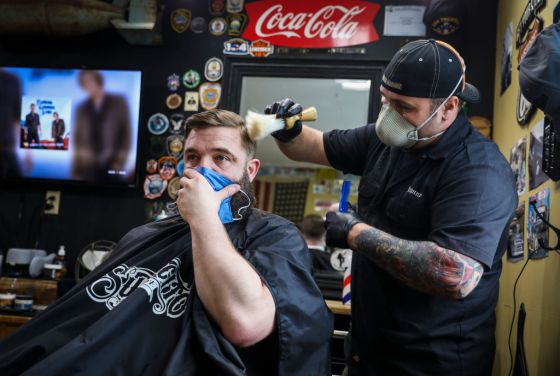
Erin Clark/The Boston Globe—Getty ImagesRusty Razor Barber Shop co-owner John Hopping cuts Norman Bettencourt’s hair on the first day of reopening since the coronavirus shutdowns over one month prior in Kittery, ME on May 1, 2020.
The National Labor Relations Act (NLRA)
For employees in the private sector, if you and another worker feel your workplace is unsafe, and you both decide to not go into work for that reason, you’re protected under the National Labor Relations Act (NLRA) as essentially going on “strike for health and safety reasons,” says Ruben Garcia, a professor of labor and employment law at the University of Nevada, Las Vegas School of Law. You would both be legally engaging in what’s known as “concerted activity,” and the NLRA prohibits employers from retaliating against workers who are exercising their “concerted activity protections,” Garcia says. Your employer can hire someone to permanently replace you, but they legally can’t fire you.
“The NLRA, it’s about bargaining; about [making] changes at the workplace,” Garcia says.
If you are fired for walking off a job because you feel unsafe, you can go to your local chapter of the National Labor Relations Board (NLRB) and file a charge against your employer, Garcia explains. This law generally applies to all private sector employees regardless of whether they’re in a union. But some employees, including agricultural workers and domestic workers, are exempt.
However, as with an OSH Act complaint, your reasoning for feeling unsafe at work needs to be more specific than just general concern about COVID-19.
If you feel your workplace is particularly dangerous, you could possibly also be protected under the Labor Management Relations Act (LMRA). Kenneth G. Dau-Schmidt, a professor of labor and employment law at the Maurer School of Law at Indiana University, tells TIME that the LMRA states that if an employee walks off the job “because of abnormally dangerous conditions,” they’re protected from being fired. Importantly, unlike under the NLRA, workers who do this are not considered on strike, meaning their employer can’t hire someone else to permanently replace them. Dau-Schmidt cautions, however, that “abnormally dangerous” is a very high standard.
The Families First Coronavirus Response Act
The recently-passed Families First Coronavirus Response Act (FFCRA), which was intended to prop up the U.S. economy during the pandemic,includes some new or expanded worker protections that last through Dec 31, 2020.
If you work in the private sector for an employer with less than 500 employees, and have COVID-19, have COVID-19 symptoms or have been quarantined by a doctor or the government, you can take two full weeks of paid sick leave at your regular pay rate, subject to certain caps.And if you qualify for this paid leave, employers can’t make you come into the office during that time. (The FFCRA also includes two weeks of paid sick leave at two thirds’ pay to employees unable to work (or telework) because they are caring for for someone who has been quarantined.)
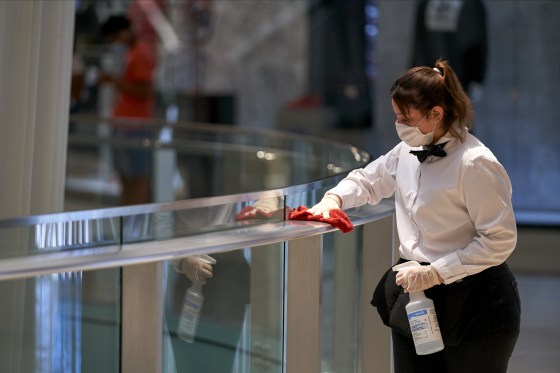
Cooper Neill—Bloomberg/Getty ImagesA worker disinfects hand rails at the Galleria Dallas mall in Dallas, Texas on May 4, 2020.
What if I have kids at home because of school and day-care closures?
The FFCRA extends up to 12 weeks of paid “expanded family and medical leave” at two thirds’ pay to employees unable to work (or telework) because they are caring for a child whose school or place of care is closed because of coronavirus. It’s subject to caps and requires that employees have been at their company for 30 days before taking leave.
However, Hommel says that employers with under 50 employees don’t need to offer the paid leave if they demonstrate it would “jeopardize the viability of the business as a going concern.”
What if I’m at higher risk of contracting COVID-19?
Individuals at greater risk from the coronavirus can still be required to return to work, but they“have special considerations,” Crotty tells TIME.
The Americans with Disabilities Act (ADA) requires employers to engage in an “interactive process” to try and provide reasonable accommodations for all employees with a disability who request one. The ADA defines a disability as “a physical or mental impairment that substantially limits one or more major life activities.”The Family and Medical Leave Act — which the FFCRA expanded — also statesthat eligible employees can take up to 12 weeks of unpaid job-protected leave for a serious health condition that makes them unable to perform their job, of if they’re caring for a family member when a serious health condition.
While the ADA does not specifically list all impairments that qualify as a disability, many of the conditions that put an individual at a higher risk of contracting COVD-19, including diabetes, heart disease, lung disease, and immunodeficiency, ”are almost always ‘disabilities’ under the law,” Ahern says.
In order to claim protection under the ADA, Hommel says, it’s wise to have a medical professional make a determination that you have a particular condition. Then you should provide your employer with documentation of that condition alongside your ADA request.
If a doctor says you need to take a leave of absence for a medical condition, the ADA requires your employer to let you take that leave — unless it creates an undue hardship for your employer, says Ruth Major, a labor and employment lawyer in Chicago. The ADA does not specify a timeframe, but case law has imposed some limitations.The ADA also has anti-retaliation provisions that prevent your employer from taking action against you if you ask for accommodations under the law.
And if you’re pregnant, be aware that the Pregnancy Discrimination Act — which applies to employers with 15 or more employees — requires employers to “provide the same kind of accommodations to pregnant employees as disabled employees,” Ahern adds.
Still, keep in mind that the ADA can’t be used to stay home from work entirely.
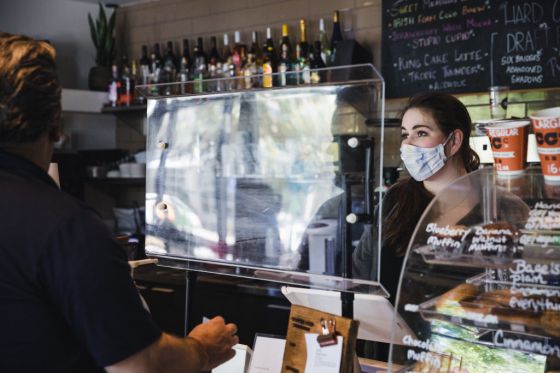
Dustin Chambers/Bloomberg—Getty ImagesA worker wearing a protective mask stands behind a plastic shield in Woodstock, Georgia, U.S., on April 27, 2020.
Can my boss cut my hours or pay due to coronavirus concerns?
The short answer: yes. “Generally, employers in the U.S. have the right to determine an employee’s hours and compensation, and then it’s the employee’s right to accept those terms or not,” Ron Chapman, a labor lawyer at the firm Ogletree Deakins in Dallas, Texas, says via email.
However, most employers need to offer at least minimum wage. And foremployees who are “exempt,” meaning they don’t usually qualify for overtime, “if the pay rate drops below the threshold, there may be liability for overtime,” Ahern writes.
If you have a collective bargaining agreement, you also might have a contractual right to set hours or a set pay, Crotty adds.
Can my boss check employees’ temperatures? Or make me report potential COVID-19 symptoms?
Once again, the short answer is yes. “Many jurisdictions are recommending and some are requiring employee temperature screenings and other measures,” Chapman writes.
Barry Chin/The Boston Globe—Getty ImagesMatt Lavallee has his temperature checked by Laura Miner, PU group lead and First Aid team member, and Heather Roode, Human resources specialist and first aid team member, at the start of his shift at Vibram Corporation in North Brookfield, Mass., on April 28, 2020.
The Equal Employment Opportunity Commission (EEOC), which enforces workplace anti-discrimination laws, hassaidemployers can test employees before allowing them back into the workplace, as long as the Food and Drug Administration determines the tests being used are “accurate and reliable.” It has also said employers can take the temperatures of their employees, but must keep their health information confidential.
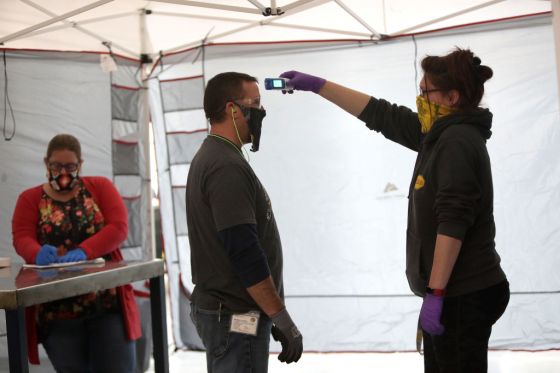
Employers must conduct temperature screenings in a way that’s safe and respectful for employees, Crotty says. “You want to let employees know about [the screening] in advance, you want to use no-contact thermometers, you want to have an appropriate person conducting the temperature checks and have that person garbed in the appropriate PPE. And if you’re in a situation where you have to send someone home, you want to be respectful and discreet about it.”
If I feel my workplace is unsafe, can I quit and collect unemployment benefits?
The federal CARES Act expanded unemployment benefits to people who might not have qualified in the past, such as gig workers (like Uber drivers) and people who are part-time employees or self-employed. It also granted Americans an additional 13 weeks of unemployment benefits and mandated that people on unemployment receive an additional $600 a week. (However, that extra money will end after July 31.)
Otherwise, unemployment regulations vary from state to state, experts tell TIME.Generally speaking, unemployment laws mandate that you can’t get unemployment if you quit, unless you have “good cause” for doing so, Crotty says. But “an unsafe working condition is a potential basis for claiming good cause,” he adds.
Among other factors, the state unemployment agency would consider the conditions under which you quit, whether you had raised any concerns to your employer, and whether the employer did anything to assess (or address) whether you actually were under “unsafe work conditions,” Crotty says.
Chapman adds that if an employee is in a high-risk category, “the unemployment agency may deem the act of quitting to be reasonable based on the unique circumstances,” although it would be a “case-by-case determination.”
If you plan on quitting because you think your workplace is unsafe, Major suggests that you first advocate your position to your employer, documenting your request and their response as evidence.But even copious notes of these interactions is no guarantee of qualifying for unemployment. “There’s always a possibility that they’re going to say, ‘we don’t think that that was unsafe.’ And so you voluntarily left and you’re not eligible for benefits,’” she says.
“Overall, quitting is risky for the employee when it comes to unemployment,” Crotty says. The employee “may ultimately prevail and show they had good cause, but there may be a delay in getting benefits while the issue is determined.” Furthermore, unemployment agencies are so backed up with claims right now that it might take a while before they “really dig in and start making determinations about eligibility,” he adds.
Sean Rayford—Getty ImagesSmall business owner Birl Hicks helps a customer at Columbia Place Mall in Columbia, South Carolina on April 24, 2020.
What other rights should I know about?
As Brudney explains, the Fair Labor Standards Act dictates that you have a right to be paid for all the work you do during all the hours you work. So if you end up working longer hours as a result of the pandemic, you’re supposed to be paid any appropriate overtime premiums you qualify for, he says.
Under the NLRA, most private sector employees also have the right to organize in a union, Dau-Schmidt tells TIME in an email.“Union workers have more opportunities to address safety issues and negotiate over changes in working conditions than non-union employees, and unions have the expertise to handle these problems well,” he writes.
Dau-Schmidt points to the example set by the United Food and Commercial Workers, which recently negotiated with grocery chain Kroger for more emergency leave, additional cleaning procedures and a pay increase. “Non-union employees can’t do that,” he says.
Ultimately, workers who are nervous about returning to work because of the virus should take the time to understand all the potential courses of action open to them, experts say.
“It is really important for people to understand all of their rights before making any employment law decisions, and to advocate for themselves in an informed manner,” Ahern says. Many of these laws are new, and “employees should not just assume that their employer knows or intends to comply with the law,” she says, adding:“Likewise, there are many circumstances that employees may face that may seem improper or irresponsible on the part of their employers, but may be very much legal.”